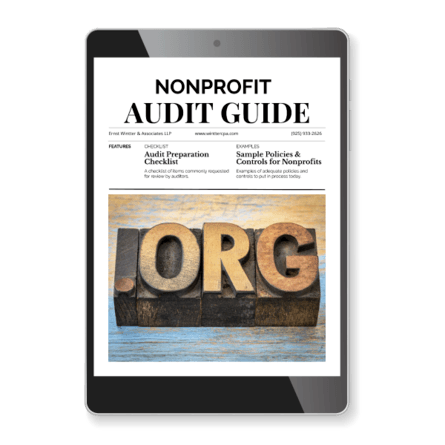

Nonprofits operate differently from for-profit entities. While nonprofits receive certain tax benefits, they are also subject to greater financial scrutiny. Many nonprofits are required to submit to an audit by law; others choose to have an audit performed to comply with donor requests or as a matter of best practice. There are several things that you can do to prepare for a nonprofit audit that will make the process smoother for you, your staff and your auditors. The Nonprofit Audit Guide also provides a practical resource for understanding audit preparation and key considerations. However, first and foremost, it is important to understand what auditors will be reviewing.
1. The Accounting Practices of Your Organization
During a nonprofit audit, your organization’s accounting practices will be closely reviewed. As tax-exempt entities, nonprofits are required to utilize ethical accounting processes. An auditor will review your organization’s financial records and systems and ensure that certain safeguards are in place to prevent theft, fraud or mismanagement.
2. Your Financial Reports
Your auditor will not only check for financial errors, but also ensure that your financial status is being properly reported to employees and stakeholders. As a nonprofit organization, you should be regularly generating internal financial statements. Nonprofit organizations often submit reports to donor organizations and government entities. These reports will be reviewed to ensure that they are submitted correctly and in a timely manner.
3. Management of Contributions
Because your organization receives private donations and/or government funds, your leadership is expected to manage these funds ethically. Auditors will examine your incoming donations and determine how organization funds are used. This will require examination of top-level management salaries, as well as any incentives or benefits. The auditor will also determine how much money was spent on marketing and fundraising expenses, as opposed to direct services, research funding or any other distribution of funds. This will then be compared to the spending patterns of organizations of similar type and size. If your organization holds any investments, historical and potential future returns will be analyzed, to ensure that funds are being invested wisely.
In addition to these key areas above, your auditor will most likely review items such as:
- Your service description
- Staffing charts
- HR practices
- Key staff qualifications
- Board roles and guidelines
Prior to your audit, your auditor, leadership and board audit committee should meet to develop a timeline and discuss the forms of documentation that you will need during the audit. The documentation needed might be extensive, but fortunately, it will change little from year to year.
As intimidating as a nonprofit audit might seem, it is worth the effort. Along with meeting your legal obligations, it will also open the door to greater funding opportunities and allow your organization to develop best practices that will make management and reporting easier. At Ernst Wintter & Associates LLP, we take the time to get to know each of our clients and understand the intricacies of nonprofit auditing. Reach out to our team by phone at 925.933.2626, or by email at info@winttercpa.com to learn more about our nonprofit auditing services.